
Solitaire:Classic Deluxe Cards
Chillapex StudioCard
4.51.46K Reviews
- Version
- 1.19.1
- Installs
- 1.00M
- Age Rating
- Everyone
Screenshots
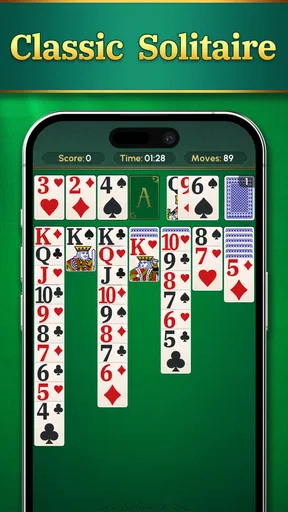
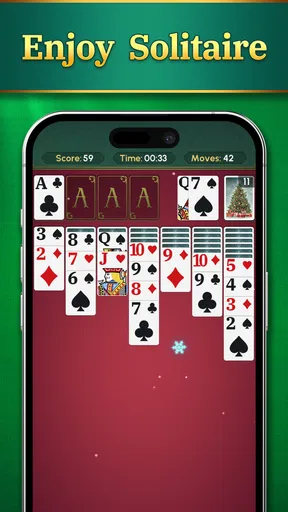
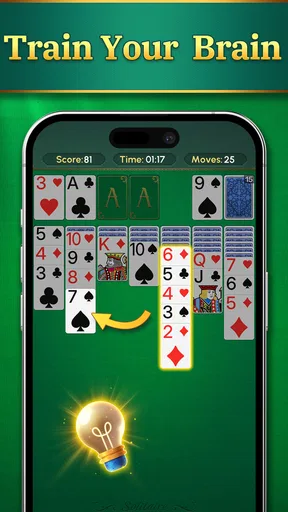
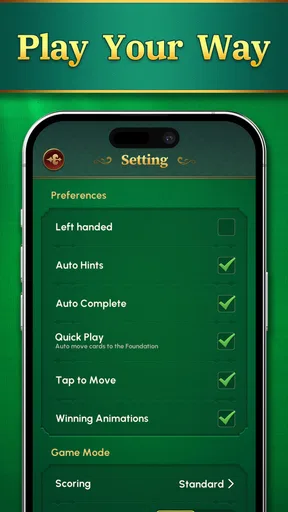
Our Review of Solitaire:Classic Deluxe Cards
 Analysis by Appyee
If you are looking for a calm card game rather than a noisy, competitive distraction, Solitaire:Classic Deluxe Cards is an easy place to begin. I found its appeal in the simple routine: open a deal, move cards with as little fuss as possible, and gradually clear the layout. It is a free solitaire game from Chillapex Studio, aimed at Everyone, and it focuses on making the familiar experience comfortable on a phone.
The game is listed in the card category and has built a sizeable audience, with more than a million installs and an average rating of 4.5 from roughly 33 thousand ratings. Those figures do not make it automatically perfect, but they do suggest that the straightforward presentation works for many players. My own impression is that this is best understood as a relaxed, accessible version of classic solitaire, not as a deep collection of unusual card modes.
What to expect when you open the game
The first thing I noticed is the emphasis on readability. Big cards matter much more on a phone than they do on a desktop monitor, especially when you are playing during a short break or holding the device in one hand. A crowded card layout can turn a familiar puzzle into a test of eyesight, so the larger presentation makes the basic decisions easier to follow.
The visual style also leans toward comfort. Beautiful themes give the table a little personality without changing the central task. I like that approach because solitaire is often something I play while listening to music, waiting for an appointment, or winding down at night. A theme can make repeated sessions feel less plain, although players who want a highly competitive or dramatic card experience may find the presentation deliberately quiet.
The core appeal is the traditional solitaire rhythm: inspect the visible cards, uncover hidden ones, build sequences, and move cards toward their appropriate foundations when the opportunity appears. The rules are familiar enough that an experienced player can start quickly, while a newcomer can learn by watching the available moves and using hints when stuck.
That hint option is particularly useful for a first session. I would not recommend treating it as an automatic button to press after every pause, because part of the pleasure comes from spotting a useful move yourself. Used sparingly, it works more like a nudge than a replacement for thinking. If you are unsure whether a deal is still worth exploring, a hint can help you understand the current position before you restart.
One practical expectation is that solitaire remains partly dependent on your own patience. A polished interface cannot make every layout winnable or every decision obvious. You will still have moments when a promising arrangement becomes blocked, and that is normal for this kind of game. The attraction is the small process of improving the position, not a guarantee that every attempt ends in a win.
Who will feel at home here
I think this game suits people who want a low-pressure card puzzle that can be played in short bursts. It is a good fit for someone returning to solitaire after years away, for a player who dislikes complicated menus, and for anyone who values large visual elements over elaborate effects. Because the content rating is Everyone, it is also positioned as a broadly accessible game rather than something built around mature themes.
It is less suitable if you are searching for multiplayer competition, a large strategy campaign, or a card game with constantly changing rules. The familiar solitaire format is the point, so players who already find standard Klondike-style play repetitive may prefer a broader card collection or a more experimental puzzle instead.
Getting started without feeling lost
Installation should be a comfortable proposition for many Android users because the game supports Android 7.0 and later. The current version is 1.19.1, so I would check that your device meets the operating-system requirement before trying to install it. Once it is ready, I recommend beginning with a quiet few minutes rather than launching it while rushing through several other tasks.
On the first launch, take a moment to identify the main play area, the face-down cards, the visible tableau cards, and the foundation spaces. New players sometimes focus only on the exposed cards and miss the larger objective: every useful move should either reveal information, create room, or help build the final piles. That simple way of thinking makes the board much easier to read.
I would also choose a theme that keeps the card faces easy to distinguish. A decorative background is pleasant, but contrast and clarity should come first. If a theme makes suits or ranks harder to see, it is not helping your game, no matter how attractive it looks. This is one of the small choices that can prevent unnecessary mistakes on a phone screen.
Before making a move, scan the entire tableau instead of tapping the first legal-looking card. Look for face-down cards that can be uncovered, empty spaces that could accept a useful sequence, and low cards that might be ready for a foundation. This quick scan takes only a few seconds and prevents the common beginner habit of moving cards without a plan.
For a first attempt, I suggest thinking in terms of information rather than speed. Revealing a hidden card is often more valuable than making a move that merely changes the order of two visible cards. That is a helpful rule when several options appear available. It gives you a clear priority and makes the game feel less like random tapping.
Your first meaningful success
The first satisfying milestone is not necessarily completing a full deal. It is uncovering a hidden card because you deliberately created the space to do so. When you move a visible sequence and expose something new, you have improved the board even if the final result is still uncertain. That moment teaches the central logic of solitaire better than a long explanation of rules.
Try this workflow in your opening minutes: inspect every available move, prioritize an action that reveals a face-down card, then reassess the whole layout. Do not continue automatically from the same area. A newly exposed card can change which sequence is most useful, and pausing to re-evaluate is often the difference between a flexible board and a blocked one.
When you see a card that can move to a foundation, consider whether placing it there will help or hurt the tableau. Moving a low card upward can be correct, but sometimes a card is temporarily more useful as part of a sequence. The trade-off is subtle: progress toward the foundations is attractive, yet preserving mobility can matter more during the early part of a deal.
This is where the hint feature can teach rather than simply rescue. If you are stuck, use one hint and ask yourself why that move was suggested. Did it reveal a hidden card? Open a space? Free a sequence? Understanding the reason gives you a repeatable skill for later games, whereas blindly following every suggestion can make the board feel like a series of instructions.
A realistic first-session goal is to finish with a better understanding of the board, even if you do not clear every card. Solitaire rewards careful choices, and the first meaningful success may be recognizing a bad move before making it. I found that this mindset keeps the game relaxing and avoids turning a short break into a frustrating attempt to force a win.
Small habits that improve your decisions
One useful habit is to delay committing cards to the foundation when they are still valuable for building tableau sequences. This does not mean avoiding the foundations; it means checking whether the move removes flexibility. If a card can serve two purposes, keep the option open until the layout gives you a stronger reason to place it permanently.
Another helpful habit is to treat empty spaces as tools, not just empty decoration. A cleared column can let you move a longer sequence, but filling it immediately with the first available card may waste the opportunity. Before occupying a space, look at which move would reveal the most information or create the most room afterward.
Also watch the order in which you expose cards. If two moves are legal, choose the one that gives you new information first. This is especially important for beginners because visible cards can create the illusion that the board is nearly solved, while hidden cards are often the real source of difficulty.
These choices are why the game can remain engaging despite its simple rules. The interface does not need to overwhelm you with systems when the small decisions already create a steady puzzle. At the same time, players who want detailed statistics, unusual variants, or a large progression structure may find the experience too focused.
Common points of confusion during play
The most common beginner mistake is assuming that every available move is equally good. A legal move can still be strategically weak if it hides a useful card, consumes a valuable empty space, or removes flexibility too early. I recommend asking one question before each important action: what does this move make possible afterward?
Another source of confusion is the difference between a move that looks productive and one that actually improves the position. Moving a sequence may make the layout look tidier, but if it does not reveal a card or support a future foundation move, it may simply rearrange the problem. When in doubt, pause and inspect the unopened cards before committing.
New players can also become over-reliant on hints. Hints are helpful, especially when you are learning the game, but they can reduce your awareness if used constantly. My preferred approach is to search independently first, then request help only after checking the tableau and considering the foundations. That keeps the feature useful without letting it play the whole game for you.
There is also a psychological trap in continuing a clearly blocked deal for too long. Because each move takes only a moment, it is easy to keep tapping in the hope that the position will somehow open. If you have checked the visible options, used a hint thoughtfully, and see no path toward revealing cards or creating space, restarting may be the more sensible choice. A restart is not a failure; it is part of learning which early decisions caused the blockage.
The large-card design helps, but it cannot remove every phone-related inconvenience. Small screens still require attention when several cards overlap, and a hurried tap can lead to a move you did not intend. I found that slowing down near the end of a sequence is worthwhile. The game is designed for smooth play, yet smoothness should not be confused with automatic accuracy.
The themes create a similar trade-off. They make the table more pleasant and can help the game feel less repetitive, but the most attractive background is not always the easiest one for careful play. If you are learning, select clarity over decoration. Once the card ranks and suits feel familiar, experimenting with the visual style becomes more enjoyable.
How it compares with other ways to play solitaire
Compared with a physical deck, this game removes setup, shuffling, and the need for a table. That makes it much better for a commute, a waiting room, or a short evening break. A real deck still offers a tactile quality that a phone cannot reproduce, and some people enjoy physically moving cards more than tapping them. The better choice depends on whether convenience or hands-on play matters more to you.
Compared with desktop solitaire, the phone-first presentation is the main advantage. Big cards and a compact layout are useful when you do not have a large monitor. The compromise is that a phone gives you less room to inspect several columns at once, so deliberate scanning becomes more important. I would choose this game for casual portability rather than for long analytical sessions.
Compared with more feature-heavy solitaire apps, this title’s focused approach may feel cleaner. You are less likely to be distracted by layers of unrelated content when your goal is simply to play a deal. On the other hand, if you expect multiple variants, elaborate challenges, competitive rankings, or a long-term reward path, a larger alternative may offer more variety.
That distinction is important before installing. The game’s strengths are its recognizable format, readable cards, smooth handling, themes, and hints. Its limitations come from the same simplicity: a player looking for novelty may run out of reasons to return sooner than someone who enjoys repeating a familiar puzzle with small improvements.
Who should install it and what to do next
For a first-time user, I would begin with one unhurried deal, choose the clearest theme, and make revealing hidden cards the priority. Let the first few moves teach you the layout instead of trying to finish quickly. If you reach a confusing position, inspect the whole board, use a hint as an explanation, and then continue only if you understand what the suggested move accomplishes.
The game is free, which lowers the barrier to trying it as a casual time-filler. Its Everyone rating and support for Android 7.0 and later also make it a practical option for people using older compatible devices. Chillapex Studio has kept the concept recognizable, so someone who already knows solitaire will not need a lengthy learning period before getting into a deal.
I would recommend it most strongly to players who want a calm, readable card game that starts quickly and does not demand a large time commitment. It is also a sensible choice for someone introducing a newcomer to digital solitaire because the big cards and hints reduce the intimidation of the first board. The first successful action is easy to define: make a move that reveals new information, then use that information to choose the next one.
I would skip it if your main reason for downloading a card game is social competition, unusual rules, or a deep progression system. In those cases, a multiplayer card title or a broader solitaire collection will probably hold your attention better. This game is at its best when you want the familiar puzzle itself, presented in a comfortable way.
My final impression is pleasantly straightforward. The best way to enjoy this solitaire game is to value good decisions over fast finishes. The large cards make the board approachable, themes keep the table from feeling completely plain, and hints offer a safety net without requiring you to surrender control. It does not try to reinvent solitaire, and that is both its identity and its main limitation.
If that focused experience matches what you want, the free download is easy to justify. Start with a clear theme, scan before tapping, protect useful empty spaces, and treat every revealed card as a small success. With that approach, the game becomes more than a way to fill a minute: it becomes a quiet, repeatable puzzle that is simple to begin and rewarding enough to revisit.
Verdict
Strengths of Solitaire:Classic Deluxe Cards
- Simple rules make it easy for beginners to start playing.
- Classic card layouts provide a familiar solitaire experience.
- Short rounds are convenient for quick breaks.
- Offline play is useful when no internet connection is available.
- Customizable card designs can make gameplay more comfortable.
Limitations of Solitaire:Classic Deluxe Cards
- Advertising may interrupt the game or appear frequently.
- Some features or themes may require in-app purchases.
- Random deals can occasionally feel repetitive over time.
- Small cards may be difficult to read on compact phone screens.
- Performance and battery use may vary on older devices.
Other Releases by Chillapex Studio
View All
Neon Lines: Tap & Clear
Casual4.9
Similar Picks in This Category
View All
Solitaire - Classic Card Games
MobilityWare4.6

UNO!™
Mattel163 Limited4.3

Spider Solitaire: Card Games
MobilityWare4.6

Solitaire.com - Classic Cards
Tripledot Studios Limited4.7

Plants vs. Zombies™ Heroes
ELECTRONIC ARTS4.1

Hearthstone
Blizzard Entertainment, Inc.4.1
Frequently Asked Questions
What is Solitaire: Classic Deluxe Cards, and how is it played?
Solitaire: Classic Deluxe Cards is a digital version of the traditional Klondike card game, designed for quick and relaxing single-player sessions. The objective is to arrange all cards by suit, starting with the ace and finishing with the king. You can move cards between tableau columns, reveal hidden cards, and use the stock and waste piles to complete each foundation.
Does Solitaire: Classic Deluxe Cards work offline?
The game is generally suitable for playing without a constant internet connection, which makes it convenient for travel, commuting, or relaxing in areas with limited service. However, some features may still require internet access, including advertisements, analytics, cloud-related services, updates, or optional online content. It is worth launching the game once while connected before relying on it offline.
Are there different game modes or customization options?
Solitaire: Classic Deluxe Cards may include familiar variations and settings intended to make the experience more personal and replayable. Depending on the version installed and your device, you may be able to adjust card designs, backgrounds, scoring preferences, difficulty-related rules, or gameplay options. The available selection can differ between Android and iOS releases, so check the in-game settings after installation.
Does Solitaire: Classic Deluxe Cards contain advertisements or in-app purchases?
As with many free-to-download solitaire games, Solitaire: Classic Deluxe Cards may display advertisements during or between games, and certain versions can offer optional purchases. These may remove ads, unlock visual themes, or provide additional conveniences. The exact pricing and purchase options can change by platform, country, and update, so review the store listing and payment details before confirming any transaction.
Is Solitaire: Classic Deluxe Cards suitable for beginners and casual players?
Yes, the game is approachable for beginners because the rules are based on one of the most familiar card games. Players can learn by experimenting with legal moves, while features such as hints, undo controls, or automatic card movement may make difficult situations easier to understand. Experienced solitaire fans can also enjoy it as a lightweight way to complete short challenges without complicated controls.
Play our best games!


